
The Power of Choice
Eveline is from a family of nine. When their parents passed away, relatives stretched their limited resources paper-thin to take care of Everline and her siblings. She moved in with her grandmother, and later, an aunt.
There was not enough, even for bare necessities. Eveline’s education came to an early end. Before Eveline came to Neema, she said, “I did domestic chores all day to help my family. Every time I ate I was reminded not to eat too much. I was overworked and felt tired with life.”
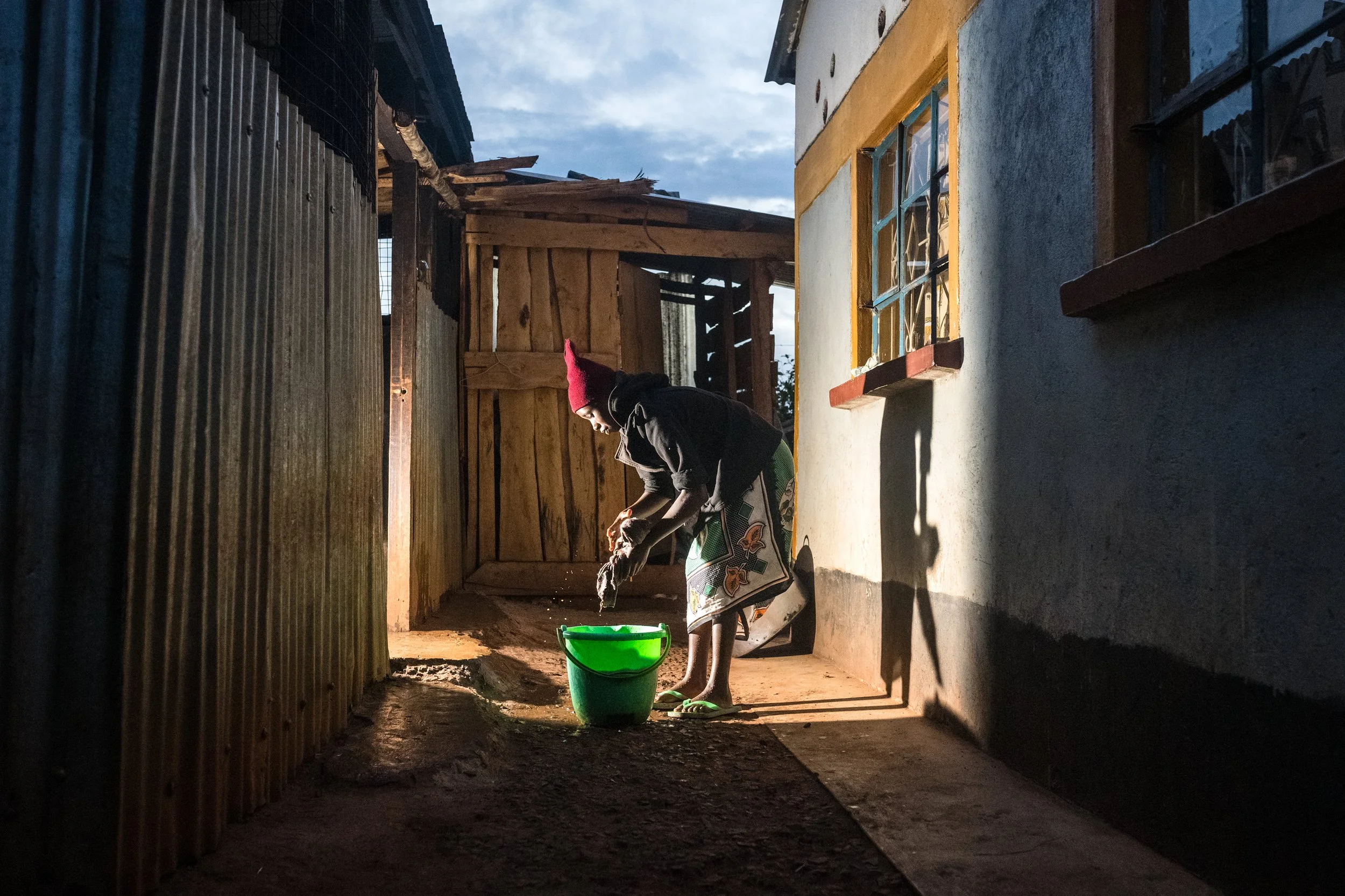
You Can’t Eat an Education
For families in extreme poverty, meeting basic needs—such as feeding everyone once or twice a day—often consumes the lion’s share of everyone’s effort and income.
In 2022, 45.5% of Kenyans lived below the international poverty line, making less than $3.00 per day.(World Bank)
A national survey revealed that nearly 1 in 4 households in Neema’s region reported lacking money to buy food. (KDHS)
Around one million Kenyan girls miss days of school each month because they cannot afford menstrual products. (Borgen Project)
This level of extreme scarcity means that there is no money left to spend on education.
School carries mandatory fees for annual national exams, uniforms (required), and transportation (few school buses; and for many, no cars). At one point, Everline walked an hour and a half to school because her family could not afford a ride.
For a young woman, a bad harvest, the loss of a job, or a family health scare might mean the end of her education.
Casual Labor
Employment in Neema’s region often comes without a contract and predictable annual salary. A 2026 KNBS survey found that more than 80% of recorded employment in Kenya in 2025 was informal (day-to-day jobs, street food or market sellers).
These jobs are never a guarantee. There is no guarantee that a casual worker will be needed the next day. There is no guarantee that customers will buy what a vendor brings to the market.
A young woman without an education, like Everline, might have few options to earn money. She might wash a neighbor’s clothes (by hand, with water she fetches from a stream and heats over a fire). She might tend crops on a small nearby farm, bringing in the harvest. She will juggle her work while also managing a full slate of domestic chores: watching younger siblings or her own child, carrying water, gathering firewood, and cleaning the house.
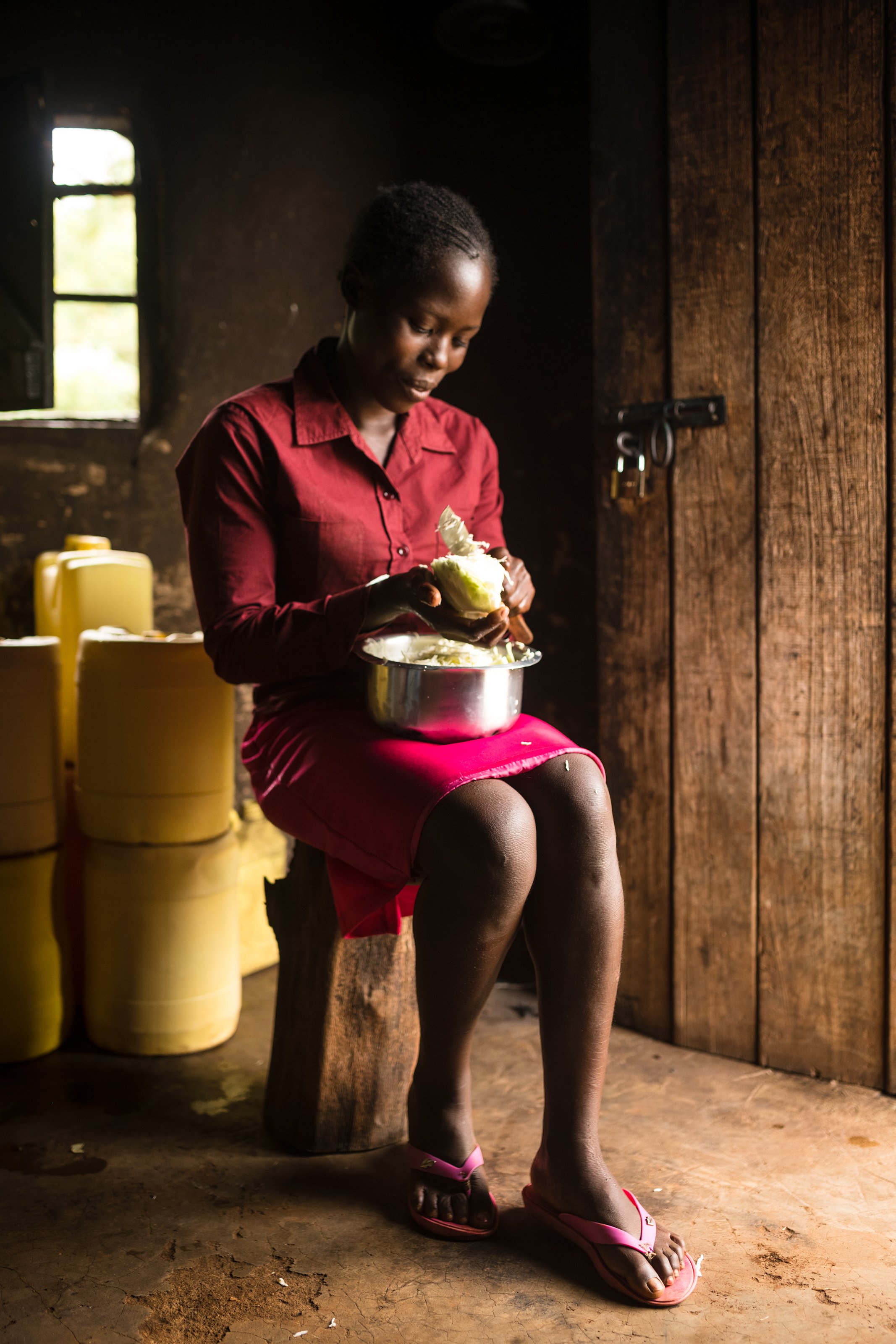
54% of Kenya’s population must travel to collect drinking water, and 69% of those who collect it are women. (UN Women)
Not enough food, not enough education, not enough time, no good options.
Mother Nature Is Changing
What’s Everline to do? To add even more complexity, climate change has hurt smallshare farmers (like Everline’s family) the hardest. These families depend on annual crops to keep food on the table. They rely on predictable rainy seasons to irrigate the fields.
But it’s not raining enough. The dry seasons grow longer. In the rainy season, it might rain twice a week. (It should rain almost every day.)
Maize is the staple crop in Kenya and 40% of it is grown in Neema’s region. Maize is a thirsty crop that—without expensive irrigation systems—depends on steady rainfall.
This year’s drought is forecasted to hurt the national food supply to the tune of a 40% decrease in available food. That means hungry families, and a lot of them.
Making Alliances
When there is no way to keep food on the table, a young woman and her family face difficult choices. Early marriage becomes a survival strategy.
A family might agree to early marriage in exchange for the bride price their daughter could command. (Bride prices are traditional in Kenya, paid by the groom to the bride’s family in installments over several years.)
A young woman might agree to a live-in relationship without the social recognition and legal protection of marriage in exchange for a roof overhead and food on the table.
However young, once married, a young woman steps into cultural expectations of motherhood and domesticity. Education belongs to a girl. As a woman, she has a household to manage.
Opening Pathways
Education and skills training open new pathways for many young women. Higher education means greater opportunities for skilled work. It means income that is more reliable and more often breaks through the international poverty line.
A young woman with a certificate or diploma does not have to put up with an abusive partner; she can provide for her own needs. She can send her children to school. She can break the cycle of extreme poverty.
That’s why Neema provides young women with vocational education. Students graduate with nationally-recognized certifications in their chosen fields. This opens the door to employment, financial stability, and the tools to build a brighter future rooted in dignity, opportunity, and hope.
Everline found peace of mind at Neema. She was able to eat every day and gained new energy to learn. With the support of counselors, she began working through her family’s losses and complexities.
Everline studied dressmaking at Neema. She graduated with a national certificate and found work in a tailoring shop. When Neema checked on her recently, she was busy with holiday orders.
“Neema helped me with skills and self-esteem,” she said.